FINDING A SERIES OR AN AUTHOR:

USING THE PAGE TABS (ABOVE) TO FIND A SERIES OR AUTHOR:

Only the most recent posts pop up on the HOME page. For searchable lists of titles/series reviewed on this Blog, click on one of the Page Tabs above. On each Page, click on the series name to go directly to my review.

AUTHOR SEARCH lists all authors reviewed on this Blog. CREATURE SEARCH groups all of the titles/series by their creature types. The RATINGS page explains the violence, sensuality, and humor (V-S-H) ratings codes found at the beginning of each Blog review and groups all titles/series by their Ratings. The PLOT TYPES page explains the SMR-UF-CH-HIS codes found at the beginning of each Blog review and groups all titles/series by their plot types. On this Blog, when you see a title, an author's name, or a word or phrase in pink type, this is a link. Just click on the pink to go to more information about that topic.
Showing posts sorted by relevance for query matthew swift. Sort by date Show all posts

Tuesday, January 11, 2011

Kate Griffin: MATTHEW SWIFT


Author: Kate Griffin (Pseudonym for Catherine Webb)
Series: MATTHEW SWIFT 
Plot Type: Urban Fantasy (UF)
Publisher and Titles: Orbit
    The Minority Council (5/2012)  

This ongoing post includes an overview of the world-building for this series along with summaries and/or reviews of all four novels. 

                  WORLD-BUILDING                  
     Set in an alternate London, this world is divided between a relatively normal day-world and a dark and supernatural night-world. When the office workers have gone home to the suburbs and the government officials have locked up their offices, the Aldermen and the Midnight Mayor take control of law enforcement in the city. The aldermen are described as "protectors of the city of London, guardians of magic, defenders and ostensible all-purpose good guys, battling the unnamed things that are out to get you, in the bleak and lonely corners of the dark." (The Minority Councilp. 144)  Of course, the Aldermen are not all good guys, and some of them have their own dark agendas.

     The premise for the hero of the series puts me in mind of Max Headroom, a legendary TV hero who was created by downloading a human being's memories to a computer to create a virtual clone.

     At the beginning of book 1, Matthew Swift, a brown-eyed urban sorcerer who has been dead for two years, suddenly finds himself alive once again—but this time with bright blue eyes and some new and fiery magical talents, in addition to the powerful magic he already had. Those new powers include the ability to pull power from the mundane life of the city, like electrical wiring and neon signs. At one point in book 1, Matthew even reads aloud the fine print on a subway pass to create a barrier spell. Matthew's newly formed characteristics have come from the entity that now lives inside him: the blue electric angels (more demonic than angelic in spirit). Matthew and the angels are now fused into one sentient being, with Matthew's appearance, memories, and emotions plus the angels' feelings and motivations. As Matthew explains, "We came back from the dead, Swift and the angels, two minds became one, two souls in one flesh, in one form, in one voice. We are me and I am we." (The Neon Court, p. 104)

     The blue angels have always lived in the telephone lines, formed from the words and emotions picked up from conservations heard and remembered over the years. Now they have entered the real world, and they are very curious—about everything.

     The series themes deal with the problems of urban bureaucracy—especially the quandary confronting Matthew and the Aldermen at every turn: Should they act for the greater good, or should they protect individual rights. The Aldermen go for the big picture—do what's best for the majority, and never mind the collateral damage. Matthew, on the other hand, can't help looking past that big picture to the individual people. Once Matthew becomes the Midnight Mayor (in book 2), he finds himself in the middle of that dilemma most of the time. As Matthew explains to his apprentice, "Alderman justice is hard, fast, and absolute. Their only guiding principle is: What's best for the greater good? And sure, that's supposed to be the guiding principle of law, but it doesn't leave much room for redemption or understanding." (The Minority Councilp. 516)

Here are two quotations that explain the perception of magic in Matthew Swift's world:
1. Matthew explains where magic comes from (Midnight Mayor, p. 159): “There are…things in this world, made up of other things—ideas—that are given life just by the nature of that idea, by the nature of living, life making magic, magic coming out of the most ordinary, trivial bits of life. Like…like when you speak into the telephone and your words are life and passion and feeling and they’re in the wires and sooner or later the wires will come alive or else they’d burst, with all that thought and emotion in them…”

2. Mr. Bakker returns from the dead for a moment to remind Matthew of the magic in everyday life in Midnight Mayor (p. 300): “Life is magic, Matthew. You said it yourself. Even the boring, mundane acts, even breathing, seeing, perceiving, being perceived. Life is magic. That is all a sorcerer is."    
MY OVERALL REVIEW OF THE MATTHEW SWIFT SERIES:
     This is a fresh and inventive series. The reader is pulled along on Matthew's adventures, but is never privy to Matthew's inner thoughts. It's as if you were tagging along with someone who knows where he's going but doesn't see the need to let you know your destination until you get there. Matthew can be an unreliable narrator at times. In fact, he sometimes withholds information from the reader for a few paragraphs or pages, just to make things interesting. For example, in The Neon Courtwhen Matthew runs into his old Order nemesis, Anton Chaigneau, he seems surprised by the man's appearance, and we assume that this is a stranger. Then, Matthew talks to the man for awhile, and finallyparagraphs laterlets us know the man's identity. Each story in the series is an exciting, darkly humorous journey taken at breakneck speed, and we are forced to trust Matthew to get us to the end safely, if not securely. The humor is dry and witty, with a self-deprecating, almost mournful tone. 

     I have just one minor fault to find with the series: Generally, I admire an author who provides a detailed sense of place in an urban fantasy novel, but in this series, Griffin really goes a bit too far with her endless, if eloquent, descriptive riffs on every single London neighborhood, street, and room through which Matthew passes—and he passes through many, many locales. Frankly, the verbal pictorialization gets repetitious, and I found myself skipping over blocks of print to get back to the plot. A little of this goes a long way. 

     Fans of Simon R. Green’s NIGHTSIDE and SECRET HISTORIES series will enjoy this series, with its dry humor and its vast menagerie of vicious supernatural creatures of the night, like the litterbug (made entirely of street litter), the grease monster (composed of old cooking oils), and Mr. Pinner (a murderous, indestructible humanoid created from bits of paper, which remind me of the Robert De Niro's final scene in Terry Gilliam's film, Brazil—death by a tornado of paper).

     Although Griffin ends the MATTHEW SWIFT series with the fourth novel, she has written a sequel series entitled MAGICALS ANONYMOUS starring Sharon Li, a human woman who suddenly develops the ability to walk through walls. She meets up with Matthew Swift, and he helps her out as she starts a support group for people/creatures who are having problems with their magic. Click HERE to read my reviews of the MAGICALS ANONYMOUS series.
  
                  NOVEL 1: A Madness of Angels                  
     After Matthew’s resurrection, he tries to contact his sorcerer friends, only to find that they are all dead; he is the only sorcerer left in London. As he tries to discover who killed him and his fellow sorcerers, Matthew must cooperate with some unlikely allies, most of whom who turn up in later books: Dudley Sinclair and his anti-magic cult (the Order); Oda (Sinclair's hired gun, with whom Matthew builds a relationship based largely on distrust); Vera and the Whites (who rely on magical graffiti to communicate); and Blackjack and the Bikers (who find magic in the speed of their bikes).

    The object of the good guys’ wrath is Matthew’s former mentor, Robert James Bakker, who has been driven by his greed for magical power and immortality to create a supernatural dictatorship that allows no detractors. The plot also involves attempts to destroy a diabolical shadow (the Hunger), which is in deadly pursuit of Matthew and his fire.    
  
                  NOVEL 2:  The Midnight Mayor                  
     In the opening scene of the second book, Matthew answers a ringing telephone, gets beaten up by a pack of spectres, and finds two red crosses branded into the palm of his hand. Then Matthew discovers that some of London’s protectors are gone or broken, that the Midnight Mayor of London (the one who rules over the night-time supernatural world)has been murdered, and that he himself is in line for the job. Matthew has two major problems to solve in this book: He must find his predecessor's murderer, and he must discover who or what is destroying the landmarks that form a magical shield around London. 

                  NOVEL 3:  The Neon Court                  
     As the story opens, Matthew finds himself in an abandoned building alongside his nemesis, Oda, who has been gravely injured. When the building starts to burn, they escape, but, as it turns, out, Oda is no longer humanshe is something very dangerous. As Matthew tries to figure out what's happening with Oda, he realizes that the sun hasn't risen in a long while, the rain hasn't stopped, and time seems to have elongated into a continual night. Along with solving this problem, he must deal with the culmination of a long-standing feud between the Neon Court (the "high-society" Faerie Court) and the Tribe (magical outcasts who gain their magic from disfiguring themselves). The Tribe's dialogue is written in texting form to emphasize their street-cred "outsiderness": Here, Toxik, the Tribe leader, is conversing with Matthew: "U rnt listnin. dat woz wat I woz ment 2 b." (p. 247). 

     Matthew is still using the mundane world to make his magic. In one scene, he brings the little orange-lit man in a "Don't Walk" sign to fiery, monstrous life to hold Oda back until the traffic light changes so that Matthew can escape. We learn a great deal about Oda's early family life in this story, and we can understand why she grew to hate all things magical. Matthew's apprentice, Penny Ngwenya, also plays a critical role in the story, which is another solid addition to a great series.

                       NOVEL 4: The Minority Council                       
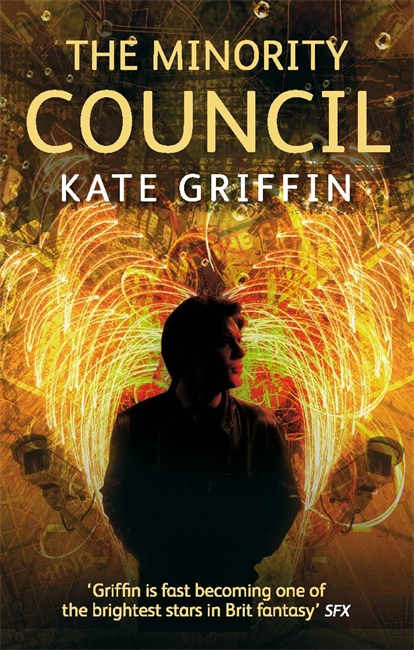
     Setting off the events of book 4 is a chance meeting between Matthew Swift and a young woman named Meera on a boat on the Thames. After Meera demonstrates an astonishing sorcerial illusion, they spend the night together, and Matthew feels like a real human being for the first time in months. Then, he gets a call from a terrified Meera begging him for help as she screams, "Don't let them take me." When Matthew tries to find Meera, he opens the proverbial can of worms from which the entire story line then proceeds.

    As it turns out, Meera was addicted to fairy dust, which gives its users (all wealthy sorcerers) enhanced magical skills while it destroys their bodies—fatally changing them into fairies and then turning their bodies into dust that is scraped up by the dealers and repackaged for sale to other addicts. It's a great business for the dealers, who only need to collect the addicts who are on the verge of going dusty and drag them off to their dusthouses to gather their remains.

    A second story line begins when Matthew meets Nabeela Hirj, a social worker who has been trying to get the Aldermen's attention for weeks. She takes Matthew to meet a teenage boy who was part of a group that was attacked by what the boy describes as a sound and a shadow with claws. One boy in the group was killed and the others have pretty much lost their minds. As Matthew investigates this situation, he finds connections that lead him to the Aldermen.

    Eventually, Matthew learns that some of the Aldermen have formed a Minority Council that operates secretly, making decisions that they know Matthew would oppose. One of them explains to him, "We are not your enemies....But we do what you dare not; what you do not have the courage to do. We see the big picture. We protect you, even if it has to be from yourself." (p. 272) As is always the case, people who blindly believe that they are working for the greater good are usually wrong—sometimes, literally, dead wrong.

    The plot follows Matthew as he investigates both cases, getting himself into more and more trouble—as is always the case for Matthew. Eventually, he gets some help from some of his usual cohorts: his apprentice, Penny; the Beggar King; and Richard Templeton, one of the more reasonable Aldermen. As Matthew destroys a dusthouse, confronts a monster fueled by rage sucked from teen-age brains, and faces betrayal from unlikely sources, he tries to maintain his humanity while still working for the greater good—which is the theme for the entire series.

     This is another great addition to a terrific series, with a compelling story line and the usual quirky characters—particularly Kelly Shiring, Matthew's new personal assistant (PA), who adds humorous pragmatism to Matthew's dark and eccentric life. Once again, not all of Matthew's friends make it through the book alive, which adds yet another layer of angst on his soul. The phrase that haunts Matthew throughout this book is "You can't save everyone." Even though Matthew goes through some terrible experiences, this story, as usual, has plenty of sardonic, noir humor. For example, when Matthew is pursued by hellhounds, his doctor rubs him down with garam masala, to which she claims the beasts are allergic. (Who knew?) Consequently, for the rest of the book, Matthew runs around smelling like curry. About half-way through the book, one of the characters summarizes the salient events of the past three books (pp., 266-273), so if you read this as a stand-alone, that should help you out. I wouldn't recommend that, however, because this series is built on a complex mythology, and the previous three books provide critical background information about Matthew's background.

Monday, December 10, 2012

Kate Griffin: MAGICALS ANONYMOUS

Author:  Kate Griffin  (pseudonym for Catherine Webb)
Series:  MAGICALS ANONYMOUS 
Plot Type:  Urban Fantasy (UF) 
Ratings:  Violence4; Sensuality0; Humor3)
Publisher and Titles:  Orbit 
          Stray Souls (10/2012) 
          The Glass God (7/2013) 

This ongoing post includes an overview of the series world-building and reviews of the two novels. It was last updated on 9/5/13 to include a review of The Glass God, the second novel, which appears at the end of this post. 

                     WORLD-BUILDING                      
     This series is set in the same alternate London that is home to Griffin's MATTHEW SWIFT series, and Matthew himself turns up as a supporting character in his role as the Midnight Mayor. (Click HERE to read my review of the MATTHEW SWIFT series.) In this world, life during the daytime is relatively normal, but at night, the supernatural world takes over, and all manner of tangible and intangible creatures drift in and out of the city's dark shadows. This magical night-time is Matthew's domain, and he is backed up (or sometimes knifed in the back) by the aldermen. Together, they are the "protectors of the city...guardians of magic, defenders and ostensible all-purpose good guys, battling the unnamed things that are out to get you, in the bleak and lonely corners of the dark." (The Minority Council, p. 144). If you haven't read the MATTHEW SWIFT series, you might be a bit confused about several references to past events that occurred during those books, but that shouldn't be enough to ruin the story for you. 

     The heroine of this series is Sharon Li, who begins as an under-employed (and soon unemployed) barista who has unexpectedly developed the ability to walk through walls. She is extremely confused about her new talent and is worried that it might come with negative side effects to her health, and she wonders if others might be in similar situations. Sharon's 21st-century solution is to create a Facebook page called "Weird Sh-- Keeps Happening to Me and I Don't Know Why But Figure I Need Help." She founds a group that she calls Magicals Anonymous (MA) and sets up a meeting for people (creatures?) who are having problems with their magic. As Matthew sums it up, Sharon is the founder of "a self-help group of the mystically buggered." (Stray Souls, p. 50) 

     Here's a description of Sharon from the second book: "Sharon exuded the brightness of a firefly, the confidence of a double-decker bus, the optimism of a hedgehog and the tact of a small thermonuclear missile." (p. 8)


     Sharon's first MA meeting (which she runs like an AA meeting) attracts a motley crew that's about as weird as the characters in a Star Wars bar. The initial group includes the following: 

 > Rhys is an almost-druid whose uncontrollable sneezing kept him from passing the test for his final Druid credentials. Here, he tries to explain his allergy problem at the first MA meeting: "Anyway, the problem...I mean, I wouldn't say it's like a massive problem, I mean, it's not like I've got a disease, see, and it's nothing criminal or anything like that! It's more how...everyone said I was going to be a druid and I was going to be the leader of my circle and...I was very excited...but then when the season comes, I just can't...And also if I get nervous then sometimes it comes out too, and the doctor says it's just psychosomatic now...bur it really does get in the way when you're trying to summon a pipe dragonling or something...so you see...it's not a problem but it's...well, it's rather ruined my life, actually. There. I said it. I was supposed to be...and now I can't. And I don't know what anyone can do to make it better." (pp. 16-17) 

 > Kevin is a germaphobic OCD vampire who is obsessed with personal hygiene—his own and others. His problem is that he has been diagnosed as having a condition that forces him to imbibe only O negative blood. As Kevin explains, "I don't know if there's like, any scientific reason to think this but I really think these O negative f---ers don't live clean. I have to bring a questionnaire along now and everything. I mean, really it's like a f---ing dis-as-ter." (p. 23) 

 > Gretel is a seven-foot troll whose problem is that she is a gourmand—a lover of fine food—but no restaurant will serve her. "My clan said it wasn't right to be interested in food, that a baked rat served on tyre rubber was all a sensible troll needed for good living. But I've got this good sense of smell...There came a time when I couldn't eat rat any more. I just wanted...I wanted something more." (p. 244) 

 > Sally is a pigeon-eating banshee whose touch turns the blood of mortals to ice and whose voice causes people to writhe and scream. She hangs from the ceiling beam at the MA meetings and communicates through messages she writes on a portable whiteboard. She is "attending Magicals Anonymous for its opportunities and positive effects. I am looking for evening classes that are friendly to my particular situation. I considered t'ai chi, but my wings get in the way. Cooking seems very interesting, but there are very few cuisines which cater for the pigeon lover. I would love to do pottery, but my talons ruin the clay on the wheel." (p. 106) Sally is extremely fond of modern art. 

 > Jess is a polymorph (shape shifter) who turns into a flock of pigeons, and then her boyfriend has to leave a trail of breadcrumbs to coax her back into human form. 

 > Mr. Roding is a 100-year-old complexion-challenged necromancer who must keep replacing his body parts (which keep falling off). Here, he explains his problem. "I...can halt the passage of degrading time upon my body through the use of ancient lore studied over many a sagely lifetime, but I still haven't found a solution for the skin-sloughing issue. The books recommend aloe vera, fat lot of use that was." (p. 31) 

 > Mrs. Rafaat is "not really magical at all, you know. I mean, I've been tested because I was having these experiences, but they weren't so much experiences as things that happened around me but actually I don't know any wizarding or witching or anything...but the thing is I do seem to know things, and really things do seem to happen and...I am...really yes...actually quite worried. I've been feeling that way for a while, something I can't quite put my finger on." (p. 30) Let's just say that Mrs. Rafaat isn't what she seems to be—not by a long shot. 

     Here's a typical scene: "A goblin sat cross-legged on the kitchen table; he was licking the end of a tube of toothpaste with a foul grey tongue. The fridge door hung open, and a troll, in fact the most troll-like troll Rhys had ever seen, was considering which cheese would serve best as the topping to her five-cheese lasagna. By the kitchen sink Kevin the vampire was unloading a fresh bag of anti-bacterial handcreams, while, from a pipe on the ceiling, Sally dangled, head buried in a copy of Van Gogh—Life and Times. A thump from the bathroom and an unmistakable smell heralded the arrival of a fifth—Mr. Roding, who greeted Rhys as he swanned into the living room, trailing the odour of lavender and decay." (p. 251) 

                  BOOK 1:  Stray Souls                  
     As you read Stray Souls, you should not worry at first about identifying the crux of the plot line. That will only frustrate you, and you will miss out on Griffin's hilarious introduction of the weird and wonderful cast of characters in Sharon's group, each of whom speaks directly to the reader. Since this is Matthew Swift's London, you already know that the plot will somehow deal with the heart, soul, and/or spirits of the city, so just relax and enjoy the lengthy introduction. The first chapters introduce all of the MA members and follow Sharon through her initial meetings with Matthew and with her goblin mentor, Sammy the Elbow—the self-described "second greatest shaman in the world." You will also meet the "four greatest killers in the world," who are like psychopathic "Bob the Builder"-like quadruplets in their yellow fluorescent jackets, but you won't learn their ultimate goal or meet their nefarious boss until later in the story. 

     Gradually, the city's two-prong problem surfaces. First, Greydawn (aka the Lonely Lady, Watchman of 4 a.m., Lady Who Walks Beside, Keeper of the Lamp, Silent Friend) is missing. She is the invisible force who comforts lonely people in the darkest hours of the night, reassuring them that she is with them and that they will be safe. Greydawn's dog—a huge hellhound-type creature—misses her and is killing people on the streets as he searches for her. Is he killing randomly? Or is there a purpose to his choices? The second (closely related) problem is that the spirits of the city are going missing. Buildings formerly inhabited by generations of spirits have been sucked dry, and night by night, more and more of the city's spirits are disappearing. 


     When Matthew discovers Sharon and her MA group, he realizes that Sharon is a newbie shaman and sends Sammy to bring her up to speed on her shamanic skills. You'd think that Matthew Swift would be able to solve London's spiritual mystery with his powerful sorcerer skills, but Matthew can only use his powers against tangible foes. In this case, the problem is with spirits, and only a shaman can save the day—or night, as the case may be. As Matthew explains to Sharon, "I've done all I can but I'm no shaman. I don't know how to walk down the hidden paths. The spirits of the city are missing and it's not natural and it's not evolution, and it's not right..." (p. 50) Sharon isn't too impressed by Matthew. Later, she tells Mr. Roding, "I think I've met the Midnight Mayor...Dark hair, blue eyes, bit of a twat, that him?...He looked kind of...scruffy....A bit...crap." (p. 164) 


     The story weaves back and forth, up and down, and around and around as the various characters explain themselves and their various problems to the reader and interact with one another in their own weirdly sweet way. Eventually a sinister villain surfaces, and the Magicals strategize on how to handle the situation. We watch Sharon, who began as a hesitant, reticent human girl, develop into a tactful but tough leader and a confidant, fearless shaman whose skills eventually save the day. 


     I love Griffin's writing, and in this book she has created a wonderful array of characters, particularly Sharon, who takes a practical approach to every problem—magical or not. For example, when Matthew and Sammy tell her that she has to save the city, the first thing she does is pull out her computer and google "save the city." When that just turns up "recycle more, build less, bicycle more, drive less, build skyscrapers. build terraces, preserve historical housing," etc., etc., she turns to her "Weird Sh--" Facebook page and posts a query on the wall. "Hey guys, does anyone know anything about the spirits of the city all disappearing or nothing? Drop me a line if you've got any ideas!" (p. 111) Sharon is pretty bummed out that the Internet failed her "since, in nearly all of her education, she'd been reliant on it to get even a C grade." (p. 51) Obviously, Sharon isn't the sharpest arrow in the quiver, but she's likable and she's relentless—she never, ever gives up. After more time on the Internet, Sharon tracks down the firm of Burns and Stoke, which owns most of the de-spirited properties in the city. The company's new chairman of the board is Mr. Ruislip (a look-alike and act-alike for Mr. Burns on The Simpsons), who turns out to be the not-quite-human villain of the story. 


     To summarize this fresh and inventive book, I'd have to say that the general effect is this: Think Stephen King's monsters-under-the-bed terror combined with South Park's hilariously profane, spot-on portrayal of the frailties of human (and inhuman) nature. Then add Griffin's mystical stream-of consciousness narration alongside self-searching monologues by a cast of eccentric, magical characters. Finally, underpin it all with a tangible, but spiritual, sense of modern urban reality. This book is a joy to read, with little gems of discourse and description on nearly every page. Stray Souls is definitely not your typical urban fantasy genre novel; it's a darkly humorous magical take on urban problems that we face in real life, voiced by an odd lot of fantastical, offbeat misfits whose statements and conversations are based on a chimerical version of mundane existence. Personally, I can't wait to see what happens next.


                    BOOK 2: The Glass God                       
     To review: In the first book, Sharon Li learns that she is a shaman, and in order to cope with the shock of her new supernatural status, she creates a Facebook page for other magical beings who might be having problems adjusting to living in the human world. She runs Magicals Anonymous like an AA group, with coffee-and-biscuit meetings in which they share their problems and give one another advice.

     As this book opens, Matthew Swift, London's Midnight Mayor has disappeared, but before that happens, he orders Kelly Shiring, his spunky personal assistant, to notify Sharon that she is now the Deputy Mayor and to give her his umbrella. Sharon isn't at all happy about being "promoted" to Deputy Mayor, but she keeps her positive attitude in place and sets out with her minion, Rhys, the sneezing Druid, to find the Mayor. Of course, since this is a Kate Griffin novel, the plot is hilariously complicated and multi-pronged. Along with Matthew's mysteriously magical umbrella, the clues include pairs of shoes draped over high wires and tree branches around London and an ever-growing number of missing persons that corresponds to the locations of the shoes. Early in the story, Sharon discovers that Matthew's physical body is now inhabited solely by the Blue Electric Angels that have been part of Matthew since book 1 of the MATTHEW SWIFT SERIES. (Click on the series title to read my reviews of those books and to get an explanation of the Blue Electric Angels.) Unfortunately, Matthew's mind has been separated from his body, so that adds another level of difficulty to Sharon's task.

     The story follows Sharon and Rhys, along with an Alderman named Miles, as they collect clues, strategize over next steps, and jump to some logical and illogical conclusions. In this book, the theme is the tension between old, earth-based magic and new, urban magic. For example, Sharon gets her first tip that Matthew is missing from a dryad who lives in a London lamppost: "a city dryad: skin of steel, hair of flowing, billowing copper, body pulsing with yellow light, eyes curved with the Perspex shell that framed a streetlight bulb." (p. 14)


     I absolutely loved the first book of this series, and I also like this one, just not as much—4 stars instead of 5. What I missed were the great characters—all members of Magicals Anonymous—whom we met in book 1. Granted, several of them show up late in the book to help Sharon save the day, but it wasn't enough for me. Frankly, I got a bit tired of Sharon's never-ending cheeriness and Rhys' constantly dripping nose and his need for antihistamines, which becomes a running (sorry about the pun), not-so-funny joke. I love Kate Griffin's writing, but this is not one of her strongest books. Also, Sharon appears to be developing a romantic relationship with Rhys, which, to me, is somewhat unbelievable. Still, I can't wait for the next book to arrive because I love Griffin's story telling and her dry humor.

Friday, December 30, 2011

Top 10 Paranormal Fiction Lists for 2011

Fortunately for readers, a LOT of excellent paranormal novels were published in 2011—both stand-alones and parts of old and new series. Sadly, though, a number of revered series came to an end.

I just couldn't narrow my "BEST" list down to 10, so I divided them up into several categories and made a "Top" list for each one. As always, just click on the pink-link series titles below to go directly to my reviews:


Here are my categories for best paranormal fiction in 2011:
   > Top 10 Paranormal Romance Novels Added to an Existing Series  
   > Top 10 Urban Fantasy Novels Added to an Existing Series
   > Top 10 Paranormal Romance Series That DĂ©buted in 2011
   > Top 10 Urban Fantasy Series That DĂ©buted in 2011
   > Top 4 Urban Fantasy Series That Came to an End in 2011
   > Top 4 Stand-Alone Paranormal Romance Novels 
   > Top 4 Stand-Alone Fantasy Novels
   > Eight Special Awards for Individual Efforts


Top 10 Paranormal Romance Novels 
Added to an Existing Series in 2011

1. Erica Hayes’s Blood Cursed, the fourth book in her SHADOWFAE CHRONICLES, which tells the love story of Diamond, a scary glassfae gangster who was a major villain in Poison Kissed, and Ember, a beautiful bloodfairy whose blood is like ambrosia to vampires.

2. Sherrilyn Kenyon and Dianna Love’s Alterant, the second book in their BELADOR series, in which the Tribunal punishes Evalle by assigning her an impossible task.

3. Nancy Gideon’s Hunter of Shadows, the fifth book in her BY MOONLIGHT series, in which the romance moves away from Max and Cee Cee to focus on Silas (a Shifter cop) and Monica (a lethal assassin).

4. Gena Showalter’s The Darkest Secret and The Darkest Surrender, the eighth and ninth books in her LORDS OF THE UNDERWORLD series, in which Amun (Secrets) and Strider (Defeat) find their soul mates after a bit of a mate mix-up.

5. Nalini Singh’s Archangel’s Blade, the fourth book in her GUILD HUNTER series, in which Singh turns away from Elena and Raphael to tell the love story of Dmitri and Honor.

6. Nalini Singh’s Kiss of Snow, the tenth book in her PSY-CHANGELINGS series, in which we FINALLY get the love story of Hawke, the SnowDancer alpha and Sienna, the young and pretty Psy defector.

7. Eve Silver’s Body of Sin, the fourth book in her OTHERKIN series, in which the mystery surrounding Lokan’s murder is finally resolved.

8. Angela Knight’s Master of Smoke and Master of Shadows, the seventh and eighth books in her MAGEVERSE series, in which the Warlock plot line moves further toward resolution—with the biggest battles still ahead.

9. Kate Pearce’s Blood of the Rose and Mark of the Rose, the second book in her TUDOR VAMPIRE CHRONICLES, in which we discover the secret life of Anne Boleyn.

10. Juliana Stone’s His Darkest Salvation, the third book in her JAGUAR WARRIORS series, in which the no-longer button-downed Julian Castille returns from his trip to Hell and falls hopelessly in love with Jaden DaCosta, the daughter of his worst enemy.


Top 10 Urban Fantasy Novels 
Added to an Existing Series in 2011

1. Kim Harrison’s Pale Demon, the ninth in her HOLLOWS series. This series gets better and better as Rachel goes on a road trip to the West Coast with Ivy, Jenks, and Trent, who is, unbelievably, acting friendly.

2. Seanan McGuire's One Salt Sea, the fifth book in her OCTOBER DAYE series, in which Toby has an undersea adventure and gets closer to a full-blown romance with Tybalt.

3. Jennifer Estep's Spider's Revenge, the fifth book in her ELEMENTAL ASSASSIN series, in which Gin Blanco and her nemesis, Mab, finally have their big showdown.

4. Nancy Holzner’s Bloodstone, the third book in her DEADTOWN series. For me, this is the strongest book in an already terrific series as it beautifully captures the mind-numbing reality of the Boston paranormal world, with its voluminous paperwork, never-ending checkpoints, menacing police visits, neighborhood lock downs, and the heartbreak of demi-human parents as they face the possibility of losing custody of children who develop paranormal traits.

5. Jeanne C. Stein’s Crossroads, the seventh book in her ANNA STRONG CHRONICLES, in which Anna has a run-in with Chael, the powerful vampire who is trying to depose her from her Chosen position, and Anna has an emotional desert adventure with her old friend, Frey.

6. Kate Griffin's The Neon Court, Or the Betrayal of Matthew Swift, the third book in her MATTHEW SWIFT series, in which Matthew meets up once again with Oda and tries to bring daylight to an endless London night.

7. Laurell K. Hamilton’s Hit List, the 20th in her ANITA BLAKE, VAMPIRE HUNTER series. For all of you who are sick of Anita’s ardeur, this one is a welcome sex-free break, and (Hurray!) Edward’s back (along with Bernardo and the sinister Olaf), so there’s lots of verbal interplay among the characters.

8. Barb Hendee’s In Memories We Fear, the fourth in her VAMPIRE MEMORIES series. If you’re looking for fascinating characters and more story than sensuality, this one’s for you.

9. Diana Rowland’s Secrets of the Demon, the third book in her KARA GILLIAN, in which Kara and her team investigate the abduction of a teen rock star and get drawn into a string of murders committed by golem-like creatures.

10. Rob Thurman’s Blackout, the sixth book in her CAL LEANDROS series, in which Cal wakes up amidst dead monsters on a deserted beach and can’t remember anything about his previous life.


Top 10 Paranormal Romance Series 
That DĂ©buted in 2011   

1. Isabel Cooper's ENGLEFIELD SERIES series (first book—No Proper Lady), in which a young woman is transported 200 years back in time to Victorian England where she must try to change certain magical events in order to save the future world.

2. Sylvia Day's RENEGADE ANGELS series  (first book—A Touch of Crimson), which follows fallen angels, vampires and lycans as they struggle for control of the world.

3. Karina Cooper: DARK MISSION (first book—No Proper Lady), in which the all-powerful Church has stepped up to take control of a devastated alternate Seattle and sends deadly hunters, called missionaries, to kill all witches, based on the Biblical edict, "Do not suffer a witch to live."    

4. Susan Grant: THE LOST COLONY series (first book—The Last Warrior) This series is more fantasy than paranormal, with its other-planet setting, but it flows like a top-notch paranormal romance, so I'm including it here.


5. Michele Bardsley: WIZARDS OF NEVERMORE (first book—Never Again) Bardsley creates the magical town of Nevermore, populated by various supernaturals, including dragons and wizards.

6. Molly Harper: NAKED WEREWOLF series (first two books—How to Flirt with a Naked Werewolf and The Art of Seducing a Naked Werewolf). Harper does a great job with the humorous dialogue among her human and werewolf characters as they fall in love in small-town Alaska.

7. Vicki Lewis Thompson: WILD ABOUT YOU (first two books—Werewolf in Manhattan and Werewolf in the North Woods) Thompson's stories are always sexy, face-paced and humorous, with quirky characters, humorous dialogue, and plenty of sensuality.

8. Michele Hauf: HAWKES ASSOCIATES (first two books—Seducing the Vampire and Forever Vampire) This series tells the love stories of two generations of vampires as they deal with the angst and passion of finding and keeping their soul mates.

9. Laurie London: SWEETBLOOD (first two books—Bonded by Blood and Embraced by Blood). This is a fresh take on the vampire mythos in which the blood of certain humans (called Sweetbloods) is like cocaine to vampires. Naturally enough, each female soul mate is a Sweetblood and each male mate is a vamp. 

10. Thea Harrison: ELDER RACES series (first three books--Dragon Bound, Storm's Heart, Serpent's Kiss). This series got off to a rocky start, but improved in book 2. Here's hoping that it gets even better.

Top 10 Urban Fantasy Series 
That DĂ©buted in 2011    

1. Rachel Vincent: UNBOUND TRILOGY (first book—Blood Bound) Here’s the first line of this terrifically dark and gritty UF series: "Only two-thirty in the morning, and I already had blood on my hands. The most messed-up part of that? It was the hour that bothered me."  Another hit UF series from Vincent.

2. Sophie Littlefield: AFTERTIME (first two books—Aftertime and Rebirth), in which the heroine (Cass Dollar) tries to survive in a post-apocalyptic world in which bioterrorism has killed most of the vegetation and zombie-esque Beaters roam the countryside attacking humans.

3. Cherie Priest: THE CHESHIRE RED REPORTS (first two books—Bloodshot and Hellbent). Raylene is a vampire thief nicknamed Cheshire Red within the global crime network. She gets involved in solving various crimes as she gathers together a family of society’s cast-offs and misfits. 

4. Michelle Rowen: NIGHTSHADE (first two books—Nightshade and Bloodlust) This is a dark and violent series with a fresh and inventive take on the vampire story. The characters are complex, with no one being either all good or all bad.

5. Melissa Marr: GRAVEMINDER series (first book—Graveminder). When Beka returns to her hometown for her Grandmother Maylene’s funeral, she learns the real reason why Maylene scrupulously attended the graves of the town’s dead.

6. Kevin Hearne: IRON DRUID CHRONICLES (first three books—Hounded, Hexed, and Hammered). Atticus O’Sullivan is a Druid who is hiding from the magical world in Tempe, Arizona. The books follow his adventures as, time after time, various supernatural beings force him back into the magical action he is trying to avoid.

7. Jon Courtenay Grimwood: THE ASSASSINI TRILOGY (first book—The Fallen Blade) This series is set in an imaginary Venice in the 1400s—fascinating characters, a compelling story line, and an authentic sense of place.

8. Kelly Meding: META WARS (first book—Trance) In this fresh and inventive world, an alternate U.S. is in a post-apocalyptic state fifteen years after a major supernatural war between two groups of powerful MetaHumans (aka Metas).

9. Amanda Stevens: THE GRAVEYARD QUEEN (first book—The Restorer) Amelia is a graveyard restorer who can see ghosts. She must be very careful because ghosts in this world seek out humans in order to drain their energy. This is almost a cozy series, with an amateur sleuth in a small town, but the spooky, creepy, look-over-your-shoulder ghosts scenes ramp up the action.

10. Anthony Frances: SKINDANCER series (first book—Frost Moon) A magical tattoo artist lives on the edge between the mundane and the mysterious in Atlanta, Georgia.

Top 4 Urban Fantasy Series 
That Came to an End in 2011

1. Richelle Mead: GEORGINA KINCAID. Just when Georgina and Seth believe that they've finally reached the smooth part of their romantic road, they discover that someone—or something—wants to keep them apart. Don't worry, though, all of the unconnected plot threads are woven together in a great finalĂ© in the final book, Succubus Revealed.

2. Jennifer Rardin: JAZ PARKS. In the final book (The Deadliest Bite), Vayl finally reunites with his reincarnated sons and all of the romantic couples get their HEAs—even Cole.

3. Lilith Saintcrow: JILL KISMET series. In the final book (Angel Town), Jill returns from the dead to seek retribution from Pericles and finally achieves her HEA with Saul.

4. Jocelynn Drake: DARK DAYS. The final book (Burn the Night) follows Mira, a fire-controlling vampire in Savannah, Georgia, as she battles the evil Naturi, ancient earth guardians-gone-bad to a final conclusion.

Top 4 Stand-Alone Paranormal
Novels Published in 2011

1. Scott Kenemore: Zombie, Ohio. A philosophy professor in a small college town wakes up after an automobile accident to find that he is now a zombie.

2. Glen Duncan: The Last Werewolf. This literary novel follows an ancient werewolf as he considers ending his long life, but instead finds a reason to stay alive.

3. Barbara Ashford: Spellcast. Maggie Graham takes a job with a summer theater company and finds herself falling for the mysterious director, Rowan, who has some supernatural secrets.

4. Carrie Vaughn: After the Golden Age. In this comic-book-inspired UF world, the talent-challenged daughter of superhero parents tries to find her way to a “normal” life.

Top 4 Stand-Alone Fantasy
Novels Published in 2011

1. Karen Russell: Swamplandia! This book is not strictly paranormal fiction, but...it does have ghosts, a touch of magical realism, and a whole lot of fangs (alligator fangs, that is, with "icicle overbites"—what a great image). Russell includes a number of mythological allusions in the story, with the River Styx being an important metaphor.

2. TĂ©a Obreht: The Tiger's Wife. Obreht uses myth-making, allegory, and a touch of magical realism as she tells us a fantastical fairy tale of a story. As Natalia grieves for her recently deceased grandfather, she recalls his many stories, which she always assumed were pure fiction, but when she makes a trip to retrieve his possessions, she soon learns that his stories were based on truth.

3. Graham Joyce: The Silent Land. No supernatural creatures here, but plenty of fantasy and just a touch of creepiness. When Zoe and Jake return to their hotel after a pleasant day of skiing in the Pyrenees Mountains, they find no trace of any people—not anywhere in the entire village. Warning: Please don’t read the ending first; you’ll spoil the story for yourself.

4. Ransom Riggs: Miss Peregrine’s Home for Peculiar ChildrenRiggs seems to have channeled both David Lynch and Stephen King as he put together this eerie time travel novel, which fits into many categories: a coming-of-age novel, a time travel story, a monster-in-the-dark tale, and a paranormal fantasy

Finally, here are seven special awards for individual efforts in 2011:

Best New Steampunk Series
Devon Monk’s THE AGE OF STEAM (first book-Dead Iron) Even if you’re not crazy about steam punk, you’ll probably enjoy this series set in an alternate Old West, where the source of evil is the Strange and the characters include werewolves, witches, and robotic bad guys.     


Best X-rated Sex-in-the-Air-Over-an-Iowa-Cornfield-at-Midnight Scene
Jeaniene Frost's One Grave at a Time, the sixth book in her NIGHT HUNTRESS series. No further explanation needed.    

Most Fascinating Supporting Character
Adrian deJesus in Cherie Priest's THE CHESHIRE RED REPORTS. He's a hunky, Cuban, ex-Navy SEAL who is hiding from his enemies by working in a strip club disguised as Sister Rose, an over-the-top dancing drag queen. Kudos to Priest for giving us such a great character!


Best Use of a Tanning Bed As a Weapon Against Vampires
Delilah Street in Carole Nelson Douglas' Virtual Virgin, the fifth book in her DELILAH STREET series.

Best Paranormal Chick Lit Series That Debuted in 2011
Sara Zettel's VAMPIRE CHEF MYSTERIES (first book—A Taste of the Nightlife), in which a mortal female chef owns a Manhattan restaurant that caters to vampires and werewolves.

Most Amusing Dialogue in a Paranormal Romance
Molly Harper's The Art of Seducing a Naked Werewolf, the second book in her NAKED WEREWOLF series. I could hear the characters in my head; they sounded just like a really good TV sit com.    

Best Paranormal Fiction Title of 2011
Diana Rowland’s My Life as a White Trash Zombie, the first book in her WHITE TRASH ZOMBIE series. I wish the story-telling had lived up to the title.


Best Paranormal Fiction Cover Art of 2011
Kristen Painter’s Blood Rights, the first book in her HOUSE OF COMARRÉ series. 

<<<>>>    <<<>>>    <<<>>>    <<<>>>    <<<>>> 
UPDATE (2/26/2016)

Here are links to all of my "best of" lists from 2010 through 2015: